

Vercel vs Netlify: Modern Next.js Deployment in 2026
Comparing build speeds, edge middleware, caching layers, and real-world billing for production applications.
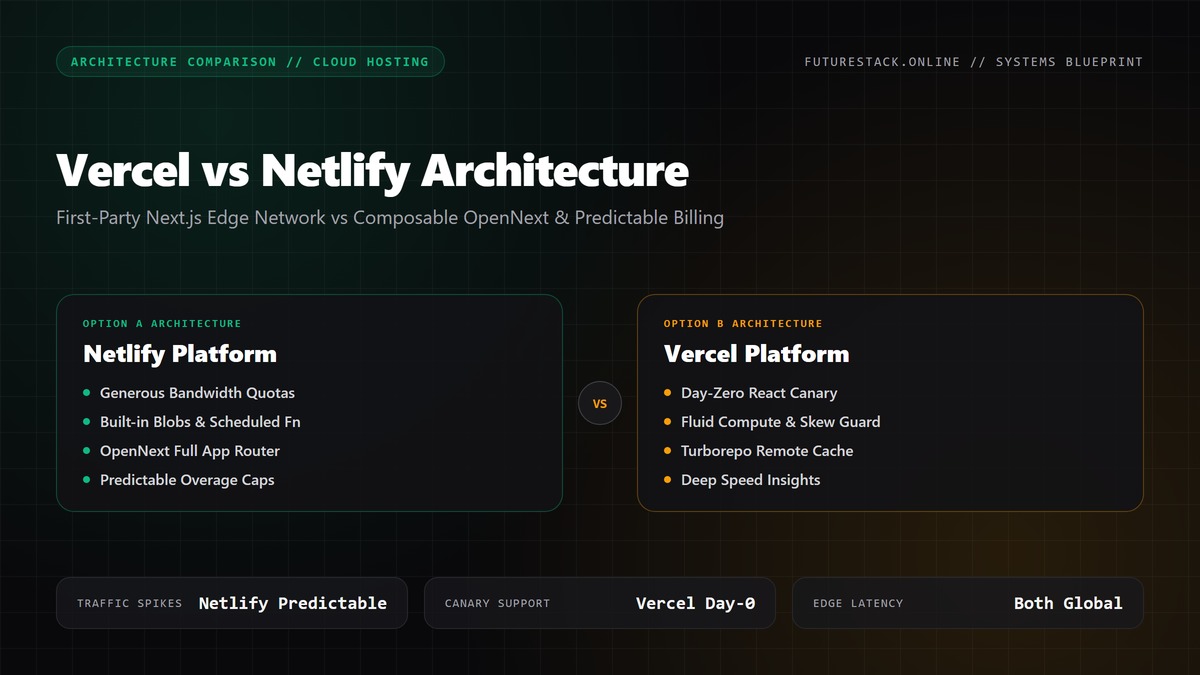
Vercel and Netlify are the two premier platforms for deploying modern React and Next.js applications. While Vercel maintains the home-court advantage as the creator of Next.js, Netlify has matured into a powerhouse with its OpenNext adapter, Netlify Blobs, and significantly more generous bandwidth pricing.
Netlify
The composable web platform with built-in Blobs, Image CDN, and predictable billing
Vercel
The creators of Next.js with first-party framework integration
Technical Benchmark Criteria
| Evaluation Metric | Netlify | Vercel | Advantage |
|---|---|---|---|
Bandwidth & Overage Economics Netlify has established a reputation for being friendlier to indie developers and viral content traffic spikes. | Generous quotas, low risk of bill shock | Strict quotas, higher overage rates | Netlify |
Next.js Day-Zero Feature Parity Vercel builds Next.js, meaning every new alpha/canary feature is tested on Vercel infrastructure first. | Near-instant via OpenNext | Day zero (First party) | Vercel |
For FutureStack and modern publications, Netlify offers the ideal balance of speed, generous bandwidth, and predictable operational costs. Vercel remains best for teams testing bleeding-edge React experimental features.
Frequently Asked Questions
Does Netlify fully support Next.js App Router and Server Actions?
Yes, Netlify provides first-class support for Next.js App Router, React Server Components (RSC), Server Actions, and On-Demand Revalidation via their official Next.js runtime.